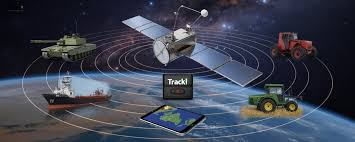
As we move into 2026, advancements in Global Positioning System (GPS) technology are reshaping navigation beyond basic location services. These innovations promise to enhance automation, logistics, and spatial intelligence, significantly impacting industries worldwide. The improvements stem from upgrades to satellite systems, better signal correction technologies, and advanced geospatial software, all contributing to a more accurate and reliable GPS infrastructure.

The new generation of GPS technology now uses multiple satellite networks that work together to provide more precise positioning signals. This redundancy helps improve reliability, particularly in dense urban areas where interference can hinder performance. Modern GPS devices can also determine a location within centimeters, rather than just meters, making them highly valuable in sectors like construction and surveying, where accuracy is crucial.
Furthermore, these breakthroughs support various applications, from autonomous vehicles to drone navigation and smart city infrastructure. The integration of precise geolocation enables efficient traffic management and real-time updated public transport systems. As GPS technology continues to evolve, its influence on logistics, urban planning, and automation will be profound, making navigation safer, faster, and more efficient.
About the Author