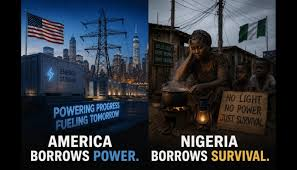
A sharp contrast has emerged between the borrowing motives of wealthy nations like the United States and developing countries like Nigeria, according to economic analysts. While America and other advanced economies take on debt primarily to finance infrastructure, military expansion, and technological dominance, Nigeria and many African nations borrow mainly to survive recurring budget deficits and fund basic government operations. This distinction was highlighted in a recent commentary that described the situation as “America borrows power, Nigeria borrows survival.” Analysts noted that this difference in borrowing purpose has profound implications for long-term economic growth and debt sustainability.

Key features of the comparison include the fact that the United States borrows in its own currency, the dollar, which gives it enormous flexibility because it can print money to repay debts if necessary. Nigeria, on the other hand, borrows largely in foreign currencies (dollars, euros, yuan), meaning that when the naira depreciates, its debt burden automatically increases. The commentary pointed out that American borrowing finances assets such as highways, airports, research universities, and advanced military systems, which boost future productivity and economic output. Nigerian borrowing, in contrast, often goes toward recurrent expenditures like civil service salaries, fuel subsidies, and debt servicing itself—items that do not create future income. The report also noted that America’s debt-to-GDP ratio is higher than Nigeria’s, but its economy is also vastly more diversified and resilient. Analysts stressed that it is not the size of the debt that matters most, but what the borrowed money is used for and the ability to repay.
The commentary called for a fundamental shift in Nigeria’s borrowing strategy. Recommendations included stricter rules that limit borrowing to capital projects with clear economic returns, such as power plants, railways, ports, and digital infrastructure. Analysts also urged the government to boost domestic revenue collection through tax reforms, reducing the need to borrow for daily expenses. Another suggestion was to prioritize borrowing in local currency where possible, or to negotiate longer repayment periods and lower interest rates with international lenders. The report warned that if Nigeria continues to borrow for survival, it will remain trapped in a cycle where new loans are used to repay old ones. However, if the country can redirect borrowed funds toward productivity-enhancing investments, future generations will inherit not just debt but also the assets and capabilities to pay it off. The commentary concluded that Nigeria must learn from successful borrowing stories in Asia, where countries like South Korea and China used foreign loans to build export industries that eventually made them creditors rather than permanent debtors. For now, the stark contrast between “borrowing for power” and “borrowing for survival” remains a defining feature of the global economic divide.
About the Author