
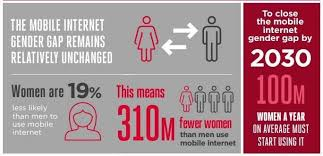
A new report by the GSMA, the global body representing mobile network operators, has revealed that the mobile internet gender gap is widest in Africa, with women significantly less likely than men to use mobile internet. The report, titled “The Mobile Gender Gap Report 2026,” found that across sub-Saharan Africa, women are 35% less likely than men to access the internet on their mobile phones. In Nigeria specifically, the gap is even wider, with only 45% of women using mobile internet compared to 72% of men. The GSMA warned that this digital divide is not just a social inequality but also a major economic loss, as closing the gap could add billions of dollars to African economies through increased e-commerce, mobile money usage, and access to online education and health information.

Key features of the report include the finding that affordability remains the biggest barrier, with many women citing the cost of data and smartphones as prohibitive. However, the report also identified other critical barriers: lack of digital literacy (women are less likely to know how to use internet-enabled features), lack of relevant content (many women do not see how the internet applies to their daily lives), and social and cultural norms (some families discourage women from going online). The GSMA noted that even when women own phones, they often have limited data plans and rely on men to purchase airtime or top-up data. The report highlighted success stories from Rwanda and Kenya, where targeted programmes that trained women on basic smartphone use and provided discounted data bundles have significantly narrowed the gap. In those countries, women who received digital skills training were three times more likely to start using mobile internet within six months. The GSMA also found that women who use mobile internet are more likely to use mobile money, access health information, and start small businesses.
The GSMA called on mobile operators, governments, and development organizations to take urgent action. Recommendations included designing affordable data plans specifically for women (smaller, cheaper bundles), launching digital literacy campaigns in local languages delivered through community networks and women’s groups, and creating more relevant content in areas like agriculture, childcare, and small business management. The report also urged smartphone manufacturers to produce ultra-low-cost devices targeted at first-time users, and for governments to remove taxes on mobile phones to reduce entry costs. The GSMA commended Nigeria’s recent efforts, including the NCC’s consumer awareness programmes, but said much more investment is needed. The report concluded that closing the mobile internet gender gap is not only a matter of fairness but also a smart economic strategy, as women who are connected can contribute more to their families and communities. For Nigerian women, the GSMA’s message is that the digital divide is not inevitable—with the right policies and programmes, every woman can get online and benefit from the mobile internet revolution.
About the Author



