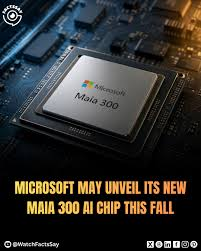
Microsoft is preparing to unveil its next-generation Maia 300 artificial intelligence chip as early as September 2026, according to a report by The Information, citing people with direct knowledge of the company’s plans. The planned reveal marks a significant step in Microsoft’s efforts to build in-house AI hardware and reduce its heavy reliance on Nvidia’s costly processors. The company has been in discussions with Taiwanese chipmaker TSMC to secure manufacturing capacity for more than 300,000 units, with deliveries expected in 2027. Microsoft’s longer-term ambitions are even more substantial, with the company reportedly targeting capacity for over one million Maia 300 units.

The Maia 300 will succeed the Maia 200, which was unveiled in January and built by TSMC using advanced 3-nanometre process technology. Microsoft’s first-generation Maia 100 AI accelerator, launched in November 2023, was manufactured on TSMC’s 5nm process and featured 105 billion transistors. The company has lagged behind rivals including Alphabet and Amazon in scaling their custom silicon businesses. Google has already begun booking revenue from direct sales of its Tensor Processing Units, while Amazon has seen wider use of its chips, including Trainium. Microsoft’s push into custom AI chips comes as major cloud providers increasingly look to design their own chips to reduce costs and gain greater control over their AI infrastructure.
To support the rollout, Microsoft is in talks with major cloud computing clients, including AI company Anthropic, to adopt the new chip. Andrew Wall, general manager for Microsoft’s Azure Maia division, stated that “Microsoft continues to invest in custom silicon as part of our long-term AI infrastructure strategy”. The company launched its first Maia AI chip in November 2023 but has been playing catch-up to competitors. The Maia 300 is designed to help Microsoft reduce its dependence on Nvidia processors and lower the cost of running AI workloads in its Azure cloud. Reports indicate Microsoft believes its self-developed Maia chips can run both its own models and OpenAI’s models at a lower cost. The company has not disclosed pricing or specific performance details for the upcoming Maia 300 chip.
About the Author