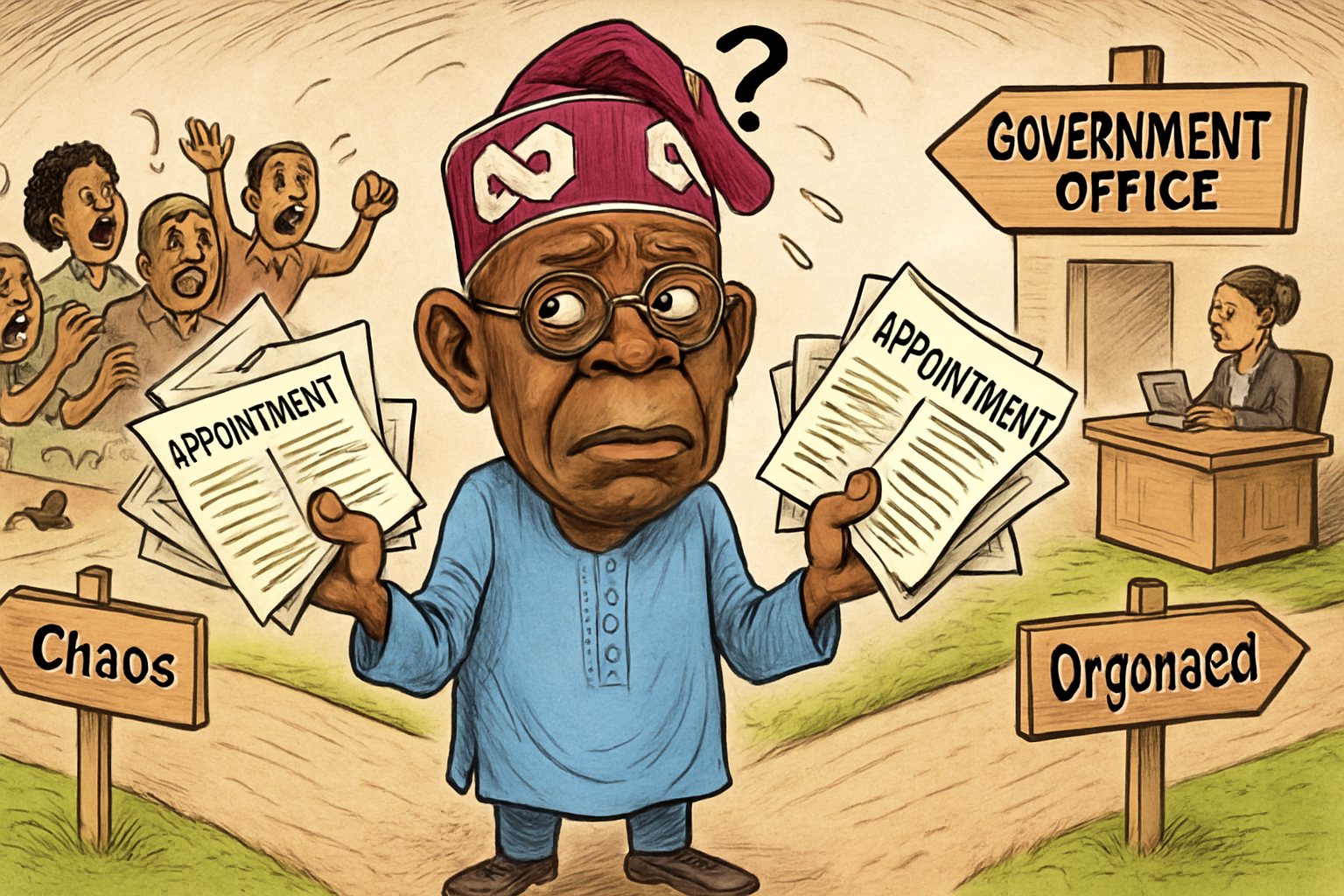
In the world of governance, being consistent and decisive is what truly defines effective leadership. Yet, President Bola Tinubu’s recent habit of reversing appointments raises some serious concerns about the stability and foresight of his administration. Take, for example, the sudden withdrawal of Muheeba Dankaka’s reappointment as chair of the Federal Character Commission, along with the quick replacement of other key nominees. These actions hint at a worrying trend of indecision that could shake the public’s confidence in his leadership.

Nigeria’s political landscape has been plagued by instability for quite some time, and these reversals only add fuel to the fire. Tinubu’s administration needs to understand that frequent changes in appointments can create a sense of chaos, both within the government and among the citizens. For instance, the rapid withdrawal of Ibrahim Kashim Imam as the FERMA board chair just two days after his announcement paints a picture of a leader who struggles to stand by his decisions. This isn’t just about appearances; it has real consequences for governance.
In more stable environments, leaders are expected to make thoughtful decisions and stick to them, which helps create a solid political atmosphere. Take the United States, for instance—there, a president’s appointments are generally seen as a reflection of their vision and priorities. Once someone is nominated, the expectation is that they will serve their term unless something extraordinary happens. This kind of steadfastness builds trust in leadership and paves the way for smoother governance.
In a striking contrast, Tinubu’s quick changes hint at a lack of strategic foresight and a failure to properly vet nominees before making announcements. The withdrawal of Ruby Onwudiwe from the CBN board due to her ties with the Labour Party highlights a troubling trend: decisions that should be grounded in merit are instead swayed by political affiliations and pressures. This not only undermines the credibility of these appointments but also alienates potential allies and experts who could play a vital role in the nation’s development.
Additionally, the cancellation of appointments on the very day of screening, as seen with Maryam Shetty, sends a discouraging message to aspiring leaders in the political landscape. It suggests that loyalty might outweigh competence, which stifles meritocracy and innovation in governance. The ripple effects of this approach could be felt across various sectors, as talented individuals may shy away from public service due to fears of arbitrary dismissal.
For Nigeria to truly flourish, it’s crucial for Tinubu’s administration to embrace a more thoughtful and transparent approach to governance. Leaders need to stand firm by their appointments and create an environment where decisions are made with the nation’s long-term vision in mind. The way forward demands a commitment to stability, accountability, and an understanding that leadership is not just a series of impulsive reactions but a significant responsibility to the people.
In conclusion, the recent wave of reversals from President Tinubu should serve as a wake-up call for both the administration and the electorate. A clear and consistent leadership style is vital for restoring trust in Nigeria’s political system and ensuring that the nation can tackle its numerous challenges with confidence and purpose. It’s time for leadership that reflects integrity and foresight—qualities that are not just desired but essential in the pursuit of national progress.
About the Author