
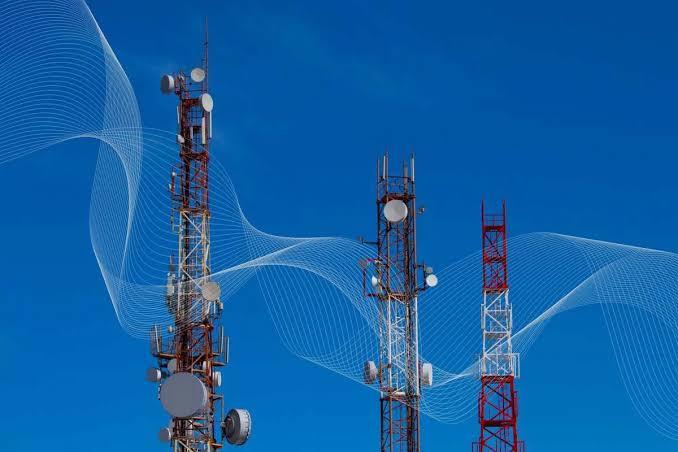
Renowned economist and Managing Director of Financial Derivatives Company, Bismarck Rewane, has recounted how Nigeria’s telecommunications sector transformed from a paltry 250,000 telephone lines in 1999 to over 170 million connected lines today, describing it as one of the most consequential economic transformations in the country’s history. Speaking at the eWorld Forum in Lagos, Rewane traced the journey from a state monopoly under NITEL to a competitive market driven by private investment. He recalled that before the GSM revolution of 2001, Nigeria had fewer than 500,000 active telephone lines and a teledensity of about 0.4 per cent, meaning only a tiny fraction of the population had access to voice communication. Today, the telecom sector contributes roughly 14 per cent to Nigeria’s GDP and has become one of the largest employers and tax contributors in the economy.

Key features of Rewane’s presentation included his emphasis on the role of regulatory independence and political will in enabling the transformation. He noted that the decision to auction GSM licences transparently and enforce clear rules attracted billions of dollars in foreign direct investment, which funded the rapid rollout of base stations, fibre, and submarine cables. Rewane highlighted that telecoms transformed not just communication but the entire economy, enabling fintech, e-commerce, online education, and digital entertainment. He pointed out that before reliable telecoms, credit cards like Visa and Mastercard avoided Nigeria, and the country was excluded from much of the global digital economy. The sector’s growth also created a new class of entrepreneurs, including SIM card vendors, phone repairers, tower engineers, and content creators, while expanding access to information and financial services for millions of Nigerians.
Rewane, however, warned that the next phase of growth faces significant headwinds, including power supply challenges, multiple taxation, foreign exchange volatility, infrastructure vandalism, and the high cost of capital for network expansion. He stressed that Nigeria cannot take its telecom success for granted and must address these constraints to remain competitive, especially as the world moves towards 5G, artificial intelligence, and the Internet of Things. He also called for deliberate policies to close the rural connectivity gap, where millions of Nigerians still live beyond reliable network coverage. Rewane concluded that telecoms remains one of Nigeria’s most compelling success stories, but sustaining it will require consistent regulation, infrastructure investment, and a stable macroeconomic environment. His remarks came at an event celebrating 25 years of GSM operations in Nigeria.
About the Author



