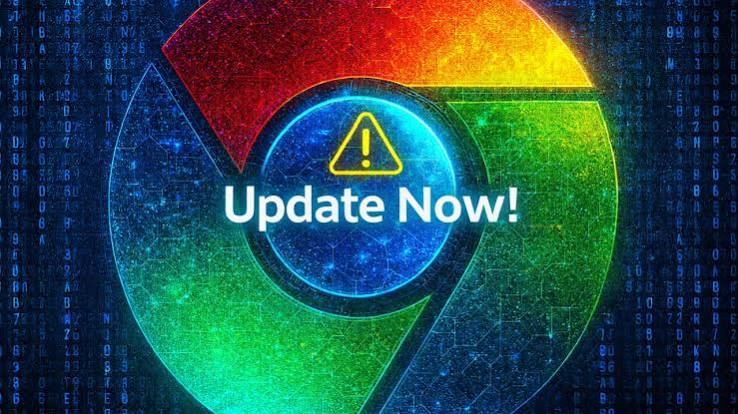
Google has released an urgent security update for its Chrome browser to patch 12 vulnerabilities, including a high-severity zero-day flaw that is being actively exploited by attackers . The vulnerability, tracked as CVE-2026-85046, is a type confusion bug in the V8 JavaScript engine that can allow attackers to execute malicious code remotely . Google confirmed that an exploit for this flaw already exists in the wild, marking the sixth Chrome zero-day the company has patched in 2026 . The U.S. Cybersecurity and Infrastructure Security Agency (CISA) has added the vulnerability to its Known Exploited Vulnerabilities (KEV) catalog, requiring federal agencies to apply patches by September 18, 2026 .

Key features of the vulnerability include its ability to let a remote attacker execute arbitrary code inside the browser’s sandbox through a specially crafted HTML page . The V8 engine processes JavaScript from virtually every website a user visits, making any drive-by delivery mechanism a potential attack vector . Security researcher Salvatore Gulizia discovered the flaw and reported it on August 4, 2026, receiving a $1,000 bug bounty . While Google has acknowledged active exploitation, it has withheld technical details until the majority of users are protected . The vulnerability also affects other Chromium-based browsers including Microsoft Edge, Brave, Opera, and Vivaldi .
Users are advised to update their Chrome browser to version 152.0.7977.82/.83 for Windows and macOS, and 152.0.7977.82 for Linux . To check for the update, users can navigate to the three-dot menu, select Help, then About Google Chrome, and restart the browser if an update is available . Google is rolling out the update gradually, so not all users will receive it simultaneously . Organizations are advised to ensure all enterprise-managed systems are updated promptly . This marks the sixth actively exploited Chrome zero-day patched in 2026, reinforcing the need for continuous browser updates .
About the Author