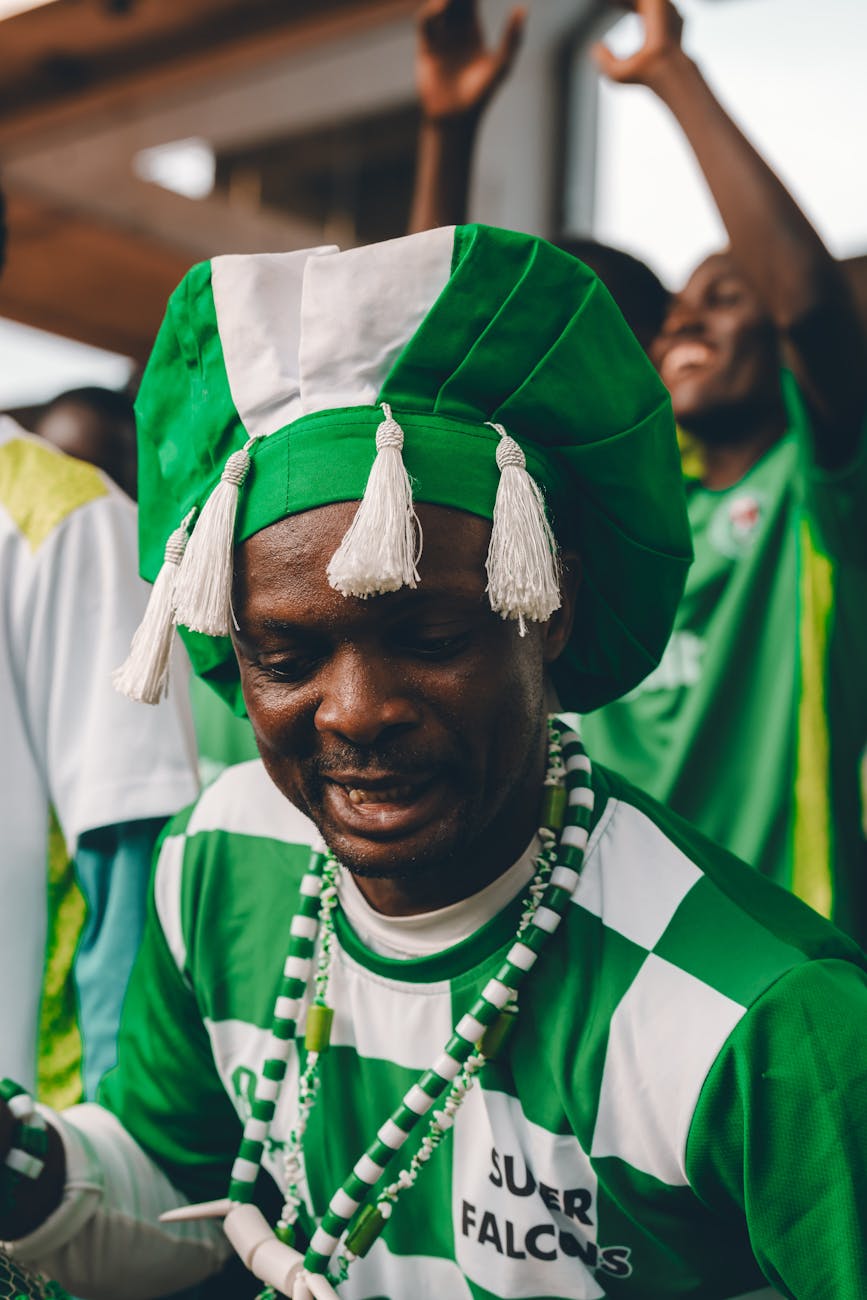
Photo by Jonathan Shembere on <a href="https://www.pexels.com/photo/celebration-of-nigerian-pride-in-traditional-attire-29804180/" rel="nofollow">Pexels.com</a>
Former Super Eagles captain Mikel Obi is making headlines as he demands the complete overhaul of the Nigeria Football Federation (NFF) if the national team fails to qualify for the World Cup for the second consecutive time in eight years. His fiery remarks, which echo sentiments he expressed in 2024 when he labeled the NFF as “thieves,” have reignited a debate about the management of football in Nigeria.

The 2026 World Cup qualification campaign has brought renewed scrutiny to the NFF, with Mikel’s comments resonating with many fans and critics alike. Some supporters of the Super Eagles agree with Mikel, arguing that the NFF lacks a long-term vision and has consistently failed to provide the necessary support for the national team. They believe that if Nigeria is to return to the World Cup stage, a significant change in leadership is essential.
However, not everyone is on board with Mikel’s stance. Critics argue that the NFF’s challenges do not extend to the Super Falcons, who have seen considerable success under the same federation. Some have suggested that Mikel should focus on the players’ performances rather than placing the blame solely on the NFF.
Adding to the complexity of the discussion, several voices have pointed out that former players and national legends, like Mikel, should be more proactive in using their expertise to help the current squad. The prevailing sentiment is that the NFF operates more as a political entity than a football organization, with many decision-makers allegedly lacking the qualifications and experience needed for their roles. This situation has led to a reluctance among Super Eagles legends to engage with the NFF, as they realize that political connections and financial backing are often prerequisites for influence within the organization.
The allegations of corruption within the NFF are not new. In 2024, Mikel highlighted the misuse of funds when the federal government allocated ₦17 billion for player bonuses and allowances, only for reports to surface that the money was diverted. This mismanagement has resulted in players threatening to boycott international duties due to unpaid bonuses.
In a broader context, the NFF’s history is marred by financial scandals. In 2020, Amaju Pinnick received 10millionfromFIFAforgrassrootsdevelopmentprojects,whichwerereportedlyabandoned,andin2014,10 million from FIFA for grassroots development projects, which were reportedly abandoned, and in 2014, 10millionfromFIFAforgrassrootsdevelopmentprojects,whichwerereportedlyabandoned,andin2014,8.4 million allocated for World Cup preparations disappeared without a trace, leading to a special investigation that ultimately fizzled out.
Mikel’s call to action underscores a critical need for reform within the NFF. He stated, “People who know what it means to represent your country should be the people in charge of it, not the people who want to steal money.” This sentiment aligns with the frustrations expressed by other football veterans, such as Sunday Oliseh and Taribo West, who have also criticized the NFF over the years.
Interestingly, with the departure of Pinnick, there were high hopes for the current NFF chairman, Ibrahim Gusau, to usher in a new era of accountability and effectiveness. However, as the World Cup qualification campaign unfolds, the pressure mounts for the NFF to demonstrate its commitment to the development and success of Nigerian football.
As fans await the outcome of the Super Eagles’ qualification efforts, the conversation around the NFF’s leadership and accountability is likely to intensify, highlighting the urgent need for transformative changes in Nigerian football management.
About the Author