
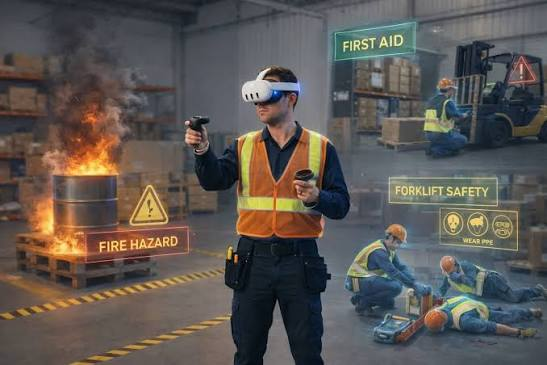
Virtual Reality (VR) is moving beyond entertainment and gaming to offer transformative solutions for Nigeria’s healthcare system and industrial sectors. As the country grapples with shortages of skilled professionals, limited training facilities, and the need for safer operational practices, VR is emerging as a powerful tool for education, simulation, and workforce development. In hospitals, VR can simulate complex surgical procedures, allowing medical students and resident doctors to practice high-risk operations in a safe, risk-free environment. In industries such as oil and gas, manufacturing, and construction, VR provides immersive safety training that prepares workers for hazardous situations without exposing them to real-world dangers. Experts say the technology could help bridge the skills gap and improve productivity across critical sectors.

Key features of VR’s potential in Nigeria include medical simulation, where doctors can practice everything from emergency response to intricate surgeries using VR headsets and haptic feedback devices. This reduces the reliance on cadavers and live patients for training, which is often limited in Nigerian teaching hospitals. In industrial training, VR allows workers to rehearse emergency evacuation procedures, operate heavy machinery, and practice maintenance tasks in a virtual replica of their actual workplace. The technology also supports remote collaboration, enabling specialists in Lagos or Abuja to guide procedures or inspections in rural areas. Additionally, VR can be used for therapy and rehabilitation, helping patients recover from strokes, manage pain, or overcome phobias. For education, VR offers immersive learning experiences that can make complex subjects more engaging and accessible, particularly in underserved schools.
Despite its promise, the adoption of VR in Nigeria faces challenges, including the high cost of headsets and software, limited local content, and inadequate power and internet infrastructure. Experts are calling for partnerships between government, tech companies, and educational institutions to develop locally relevant VR content, subsidise hardware costs, and train instructors in its use. They also stress the need for a regulatory framework to ensure data privacy and safety, particularly in medical applications. For Nigeria to fully benefit from VR, stakeholders must view it not as a luxury but as a strategic investment in workforce development and economic competitiveness. As the technology becomes more affordable and accessible, its potential to transform how Nigerians learn, work, and receive healthcare is immense.
About the Author



