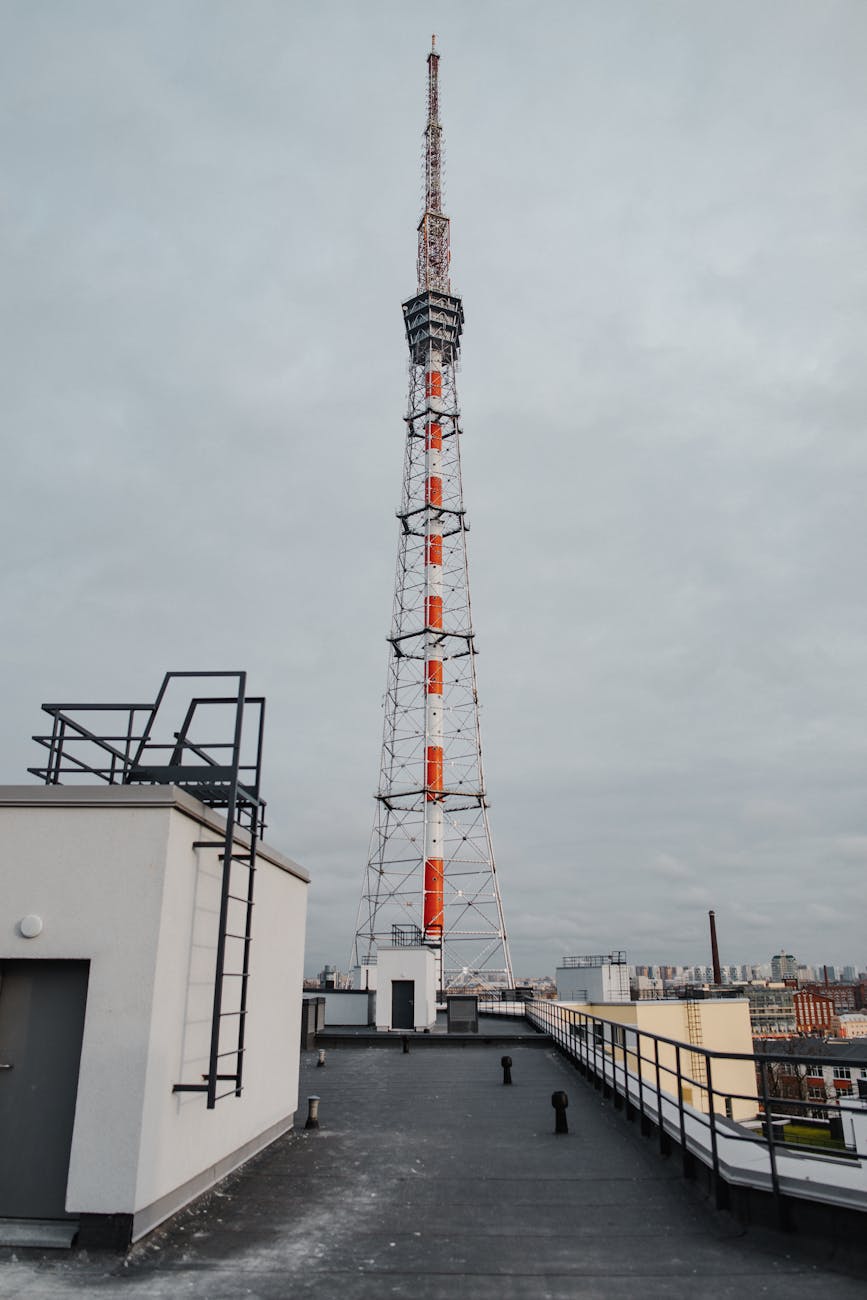
Photo by Max Avans on <a href="https://www.pexels.com/photo/saint-petersburg-tv-tower-under-gloomy-sky-5066557/" rel="nofollow">Pexels.com</a>
China has just made a groundbreaking move by launching the world’s first commercial 10G broadband network, boasting internet speeds of 10 gigabits per second (10Gbps) – that’s more than 100 times faster than your average 5G connection! This cutting-edge network, which is currently rolling out in Beijing and Shanghai, allows for instant 4K and 8K video streaming, nearly zero latency for cloud services, and incredibly fast downloads (think downloading a 1GB file in less than a second). With support from major Chinese tech players like Huawei and ZTE, this initiative marks a significant step forward in China’s ambition to dominate global connectivity standards as part of its “Digital Economy 2030” plan.

For Nigeria’s telecom industry, this development is both a source of inspiration and a challenge. While Nigeria is still grappling with inconsistent 4G coverage and gaps in fiber optic access, China’s 10G achievement highlights the growing digital divide on a global scale. Currently, Nigerian operators like MTN and Airtel are averaging speeds of just 25Mbps, with fiber networks mostly confined to urban areas. However, the Chinese approach – especially Huawei’s affordable infrastructure solutions – could provide valuable insights for Nigeria’s broadband expansion under the National Broadband Plan 2025, which aims for 70% coverage with minimum speeds of 25Mbps.
Just as China is using 10G to enhance its domestic tech and streaming platforms, Nigeria could harness improved broadband to foster its own digital economy. While 10G might still be a few years off for Nigeria, China’s achievement highlights the pressing need for Nigeria to bridge its connectivity gaps to stay competitive in the digital landscape.
About the Author