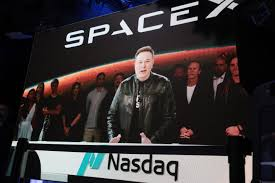
Elon Musk, the CEO of Tesla, SpaceX, and owner of X (formerly Twitter), has made history by becoming the world’s first person to reach a net worth of one trillion dollars. According to the Bloomberg Billionaires Index and Forbes real-time wealth trackers, Musk’s fortune crossed the historic threshold following a sharp surge in Tesla’s stock price and a new valuation of SpaceX from private investors. The milestone marks the first time any individual has accumulated a trillion-dollar fortune, surpassing the previous record held by Jeff Bezos and Bernard Arnault. Musk’s wealth is largely tied to his stakes in his companies, and the trillionaire status reflects not just his business success but also investor confidence in electric vehicles, space exploration, artificial intelligence, and sustainable energy.

Key features of Musk’s rise to trillionaire status include Tesla’s market capitalization, which recently exceeded $1.5 trillion, making it one of the most valuable car companies in history despite producing fewer vehicles than traditional automakers like Toyota or Volkswagen. SpaceX, his private space exploration company, is now valued at over $350 billion following successful Starship launches and lucrative contracts with NASA for lunar and Mars missions. Musk also owns The Boring Company (tunnel construction), Neuralink (brain-computer interfaces), and xAI (artificial intelligence). The Bloomberg Billionaires Index noted that Musk’s net worth has grown by over $500 billion in just the past 18 months, driven by Tesla’s delivery records, SpaceX’s Starlink satellite internet expansion, and investor enthusiasm for AI-related ventures. Unlike other billionaires whose wealth comes from diversified holdings, Musk’s fortune is concentrated in high-growth tech and space industries, making it more volatile but also capable of dramatic increases. The report also noted that Musk pays no cash salary from his companies, instead holding equity that appreciates with their success.
The world’s first trillionaire status has sparked both celebration and criticism. Supporters point to Musk’s role in accelerating the world’s transition to electric vehicles, reducing space launch costs, and providing internet to remote areas through Starlink, which is now active in Nigeria and other African countries. Critics, however, argue that such extreme wealth concentration is unhealthy for democracy and society, with some calling for higher taxes on the ultra-rich. Musk himself has not publicly commented on the trillionaire milestone but has previously stated that he plans to use his wealth to fund human settlement on Mars. Analysts predict that Musk may not hold the title for long, as other billionaires like Jeff Bezos (Amazon), Bernard Arnault (LVMH), and Mark Zuckerberg (Meta) are also seeing rapid wealth growth. For now, Elon Musk stands alone atop the wealth rankings, having achieved what was once considered impossible. The milestone raises new questions about wealth inequality, philanthropy, and the future of capitalism in an age of trillion-dollar fortunes.
About the Author